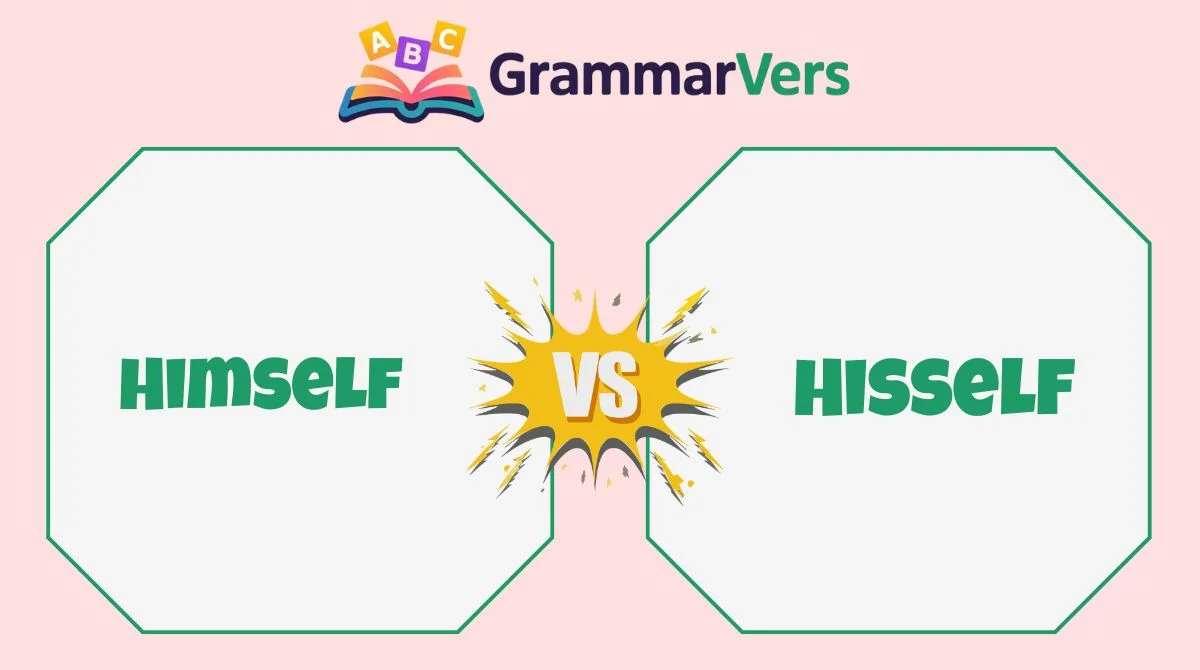
Many English learners feel confused when they hear words that sound similar but are used differently. One common example is hisself vs himself.
You might hear someone say “He did it hisself,” and then see “He did it himself” in a book. So which one is right?
This confusion happens because English has both standard grammar rules and informal spoken variations. Some words are accepted in formal writing, while others are used only in casual speech or certain dialects.
If you are learning English, it’s important to know the difference so you can speak correctly and confidently.
Understanding this topic will help you avoid common mistakes in exams, writing, and daily conversations. It will also help you sound more natural when you speak English.
By the end of this lesson, you will clearly understand:
- What “hisself” means and why it’s not standard
- What “himself” means and how to use it correctly
- The key differences between the two
- Easy rules and tricks to remember the correct form
What Does “Hisself” Mean?
“Hisself” is a non-standard or informal word. It is often used in some regional dialects, especially in spoken English. However, it is not correct in standard English grammar.
Simple Definition
“Hisself” is an incorrect or non-standard version of “himself.”
When Is It Used?
You may hear “hisself” in:
- Informal speech
- Certain regional accents
- Old or dialect-based conversations
However, you should avoid using it in:
- Writing
- Exams
- Professional communication
- Formal speaking
Grammar Rule
Standard English does not recognize “hisself” as correct. The correct reflexive pronoun is always “himself.”
Example Sentences
Here are some examples where people might use “hisself” (but remember, these are not correct in standard English):
- He fixed the car hisself.
- John made dinner hisself last night.
- The boy cleaned his room hisself.
- He taught hisself how to play guitar.
- My uncle built that house hisself.
- He carried all the bags hisself.
- The child dressed hisself quickly.
Common Learner Confusion
Many learners think “hisself” follows the same pattern as:
- myself
- yourself
So they assume:
- his + self = hisself
But English doesn’t work that way here. Instead of “hisself,” the correct word is “himself.”
What Does “Himself” Mean?
“Himself” is a correct reflexive pronoun in English. It is used when the subject and object of a sentence are the same person (male).
Simple Definition
“Himself” refers back to a male subject in a sentence.
When to Use It
Use “himself” when:
- A man or boy does something to his own self
- You want to emphasize that he did something alone
Grammar Rule
“Himself” is formed from:
- him + self
It is used as a reflexive pronoun or emphasizing pronoun.
Example Sentences
- He hurt himself while playing.
- John taught himself English.
- He made the cake himself.
- The boy dressed himself quickly.
- He looked at himself in the mirror.
- He fixed the car himself.
- He introduced himself to the teacher.
- He blamed himself for the mistake.
Common Learner Confusion
Some learners mix up:
- himself
- his self (incorrect)
- hisself (incorrect)
Only “himself” is correct in standard English.
Difference Between Hisself and Himself (Detailed)
Here is a clear comparison to help you understand better:
| Feature | Hisself | Himself |
|---|---|---|
| Correctness | Incorrect (non-standard) | Correct |
| Usage | Informal speech only | Formal and informal |
| Grammar Status | Not accepted | Accepted |
| Type | Dialect/slang | Reflexive pronoun |
| Use in Writing | ❌ No | ✅ Yes |
| Use in Exams | ❌ No | ✅ Yes |
Usage Difference
- “Hisself” is used only in casual or regional speech.
- “Himself” is used in all types of English: spoken, written, formal, and informal.
Grammar Logic
English reflexive pronouns follow a pattern:
- myself
- yourself
- himself
- herself
- itself
Notice that “himself” is the correct form, not “hisself.”
Sentence Structure Difference
Incorrect:
- He did it hisself.
Correct:
- He did it himself.
Meaning Comparison
Both words are meant to show that someone did something alone or to themselves. However:
- Only “himself” is grammatically correct.
- “Hisself” may sound natural in some areas, but it is not standard English.
Grammar Rules You Must Remember
Rule #1: Use Standard Reflexive Pronouns
Always use correct forms like:
- himself
- herself
- myself
Example:
- He taught himself to swim. ✅
Rule #2: Avoid Non-Standard Forms
Never use “hisself” in writing or formal speech.
Example:
- He fixed it hisself. ❌
- He fixed it himself. ✅
Rule #3: Match Subject and Pronoun
Use “himself” only for male subjects.
Example:
- John prepared himself for the exam. ✅
Rule #4: Use “Himself” for Emphasis
“Himself” can show that someone did something alone.
Example:
- He built the table himself.
This means no one helped him.
Common Mistakes Students Make
Why Mistakes Happen
Students often:
- Learn English from informal speech
- Follow patterns incorrectly
- Translate from their native language
Wrong vs Correct Examples
❌ He did it hisself.
✅ He did it himself.
❌ He hurt hisself.
✅ He hurt himself.
❌ He cleaned hisself.
✅ He cleaned himself.
Easy Correction Tips
- Always remember: “hisself” is not correct
- Replace it with “himself” every time
- Practice writing correct sentences
Easy Trick to Remember the Difference
Here’s a simple trick:
👉 Think of the word “him”
If the sentence has “him,” then the reflexive form is:
➡️ him + self = himself
Not:
❌ his + self
❌ hisself
Real-Life Logic
You say:
- I → myself
- You → yourself
- He → himself
So just follow the pattern.
Daily Life Examples (Very Important)
Here are some natural, spoken English examples using “himself”:
- He made lunch himself today.
- My brother fixed his bike himself.
- He introduced himself at the meeting.
- He taught himself how to cook.
- He blamed himself for being late.
- He cleaned the house himself.
- He prepared himself for the interview.
- He handled the problem himself.
- He bought the gift himself.
- He looked at himself in the mirror.
These are the kinds of sentences you will hear every day.
Practice Section
Choose the correct word: hisself or himself
- He repaired the phone ______.
- The boy hurt ______ while playing.
- He cooked dinner ______.
- He blamed ______ for the mistake.
- He dressed ______ quickly.
Answers
- himself
- himself
- himself
- himself
- himself
FAQs
1. What is the difference between hisself and himself?
“Hisself” is incorrect and non-standard, while “himself” is the correct reflexive pronoun used in English grammar.
2. Can we use hisself in speaking?
You may hear it in informal speech or dialects, but it is not recommended. It’s better to always use “himself.”
3. Is himself formal or informal?
“Himself” can be used in both formal and informal situations. It is completely correct in all contexts.
4. Why do some people say hisself?
It comes from regional dialects or informal language patterns. It is not part of standard English grammar.
5. Is hisself ever correct?
No, it is not correct in standard English. It should be avoided in writing and proper speaking.
6. How can I remember to use himself?
Just remember the base word “him.”
If you can say “him,” then the correct reflexive form is “himself.”
Final Conclusion
Understanding the difference between “hisself” and “himself” is simple once you know the rules. “Hisself” may sound natural in some informal conversations, but it is not correct in standard English.
On the other hand, “himself” is the proper reflexive pronoun used in both speaking and writing.
If you want to improve your English, focus on using correct forms like “himself” in your sentences. This will help you sound more natural, confident, and accurate.
Small grammar points like this can make a big difference in how others understand you.
Practice using “himself” in daily sentences, and avoid “hisself” completely. With regular practice, this confusion will disappear, and you’ll use the correct word without even thinking.